
Every late Rabi and early Kharif, from March to May, Pakistan repeats the same argument with renewed urgency: who took more water, who received less, and who “violated” the share. This insight holds that Pakistan’s water crisis stems not from a flawed Water Apportionment Accord of 1991 (WAA-91), but from its narrow and selective implementation.
The WAA-91 was designed as a governing framework that provided an agreed mechanism to apportion available water resources and proposed future actions to ensure agreed water sharing and provincial safeguards, including allocations, surplus handling, storage development, ecological safeguards, provincial development space, and interim rules until new reservoirs are built.
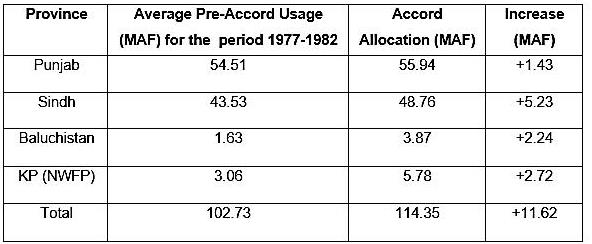
Figure 1: Pre-Accord Provincial Water Use and WAA-91 Allocations
Source:Compiled by the author
The Accord first recognised existing provincial withdrawals and then redistributed an additional 11.62 MAF to address historical shortfalls. Sindh received the largest absolute adjustment, reflecting formal recognition of its longstanding claims of under-allocation. In proportional terms, however, the most significant gains went to the smaller provinces: KP’s allocation increased by roughly 89% over its pre-Accord use, while Baluchistan’s rose by approximately 137%. Punjab’s allocation changed only marginally from historical use. These outcomes indicate that the Accord was not merely a Punjab–Sindh compromise but a framework designed to expand development space for smaller provinces by redistributing newly recognised water.
The additional 11.62 MAF reflected in the 1991 Water Apportionment Accord arises because the agreed provincial allocations totalling 114.35 MAF were set above the prevailing pre-Accord system withdrawals of approximately 102–104 MAF, on the assumption that future storages and improved regulation would make this water available. Sindh’s objection to upstream development was the uncertainty of downstream flows, to the river and to six inundation canals in 1991. The WAA allowed the province to operate these canals (with very high allocation) within the provincial share (Figure 1).
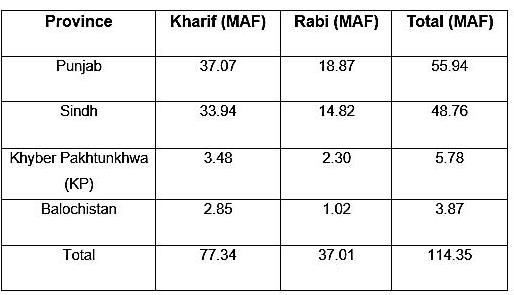
Figure 2: Water Allocation Framework under the WAA-91
Source:Indus River System Authority (IRSA)
The core provision of the WAA-91 is clause 2, which defines the fixed annual apportionment of Indus Basin waters among the provinces, about 11.5 MAF higher than the system was already withdrawing. It allocates quantified shares largely to Punjab and Sindh, based on historical withdrawals and irrigation needs. As shown in Figure 2, this clause establishes a total annual allocation of 114.35 million acre-feet (MAF), divided into 77.34 MAF for the Kharif season and 37.01 MAF for Rabi, with flows apportioned accordingly among the provinces. The larger Kharif share reflects the seasonal nature of Indus River flows, with the contrast between seasons most evident in Punjab’s and Sindh’s allocations, highlighting the importance of seasonal considerations in the Accord’s allocation framework.
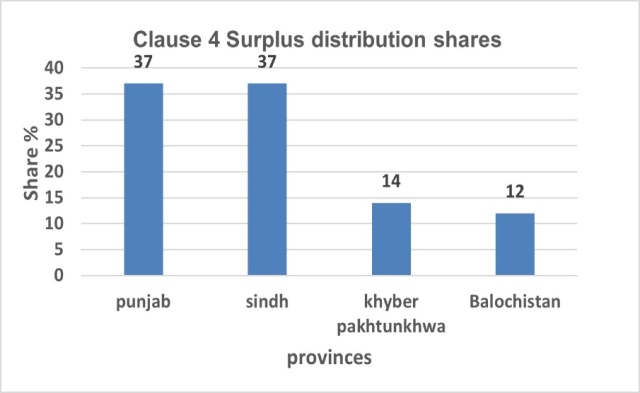
Figure 3: Clause 4 Surplus Distribution Shares
Source:Compiled by the author
However, Clause 4, which states that Balance River supplies (including flood supplies and future storage) shall be distributed as shown in Figure 3, sought to ease inter-provincial tensions by establishing principles for the equitable distribution of surplus river flows, particularly during the Kharif season.
Unlike Clause 2, which fixes allocations for an average year, Clause 4 applies when river flows exceed those allocations and requires that such surplus be shared among provinces according to agreed proportions.
The bar chart depicts how excess water beyond standard entitlements was intended to be distributed in a balanced manner, reducing zero-sum competition during high-flow periods. Yet there is a complex engineering reality behind this political design. Without adequate storage and flood-management capacity, “surplus” water is often a short-lived event rather than a usable asset. As a result, Pakistan’s inter-provincial water disputes do not typically emerge in average flow years but intensify during periods when water availability falls short of Kharif or Rabi sowing requirements, particularly during the critical storage-dependent months of October–December and March–May. This structural vulnerability is directly addressed in Clause 6 of the Accord, which recognises the need to build water storage on the Indus and other rivers, where feasible, to support future agricultural development, and that all participating provinces must acknowledge this.
Clause 6 is arguably the Accord’s most strategic provision because it concedes that numerical allocations alone cannot stabilise a river system characterised by strong seasonality and increasing climate variability. The intent was not merely to divide water, but to store excess flows from wet periods for use during lean seasons. In this sense, new storage systems were conceived as the shock absorbers of the Indus system rather than as discretionary infrastructure.
Contrary to a standard and misleading public perception, the Accord did not freeze provinces into permanent dependency. Clause 8 (There would be no restrictions on the provinces to undertake new projects within their agreed shares) and Clause 12 (The requirements of Left Bank Outfall Drain-LBOD will be met out of the flood supplies in accordance with the agreed sharing formula) were designed to do the opposite by allowing provinces to develop water resources within their allocated shares and to pursue projects without undue restriction, including explicit recognition of KP and Balochistan’s right to establish the Kurram, Gomal, Kohat basins, and other western tributaries.
The Accord anticipated a transition period, during which new reservoirs had not yet been built, but water stress would still intensify. Clauses 14a and 14b proposed interim operational disciplines, including equitable sharing of shortages and surpluses based on historical use, prioritising irrigation over power generation, allowing seasonal adjustments to allocations, and promoting efficiency to reduce waste.
In conclusion, the WAA-91 is not outdated. It is under-implemented, suggesting a rapid expansion of new reservoirs to restore system buffering, reduce seasonal panic, and make surplus distribution feasible by upgrading flood management and conveyance systems to store, route, and share surplus transparently. It strengthens ecological protections by treating delta flows as legally binding obligations rather than political afterthoughts. It enables provinces to develop within their shares, especially in smaller schemes and underserved basins, without turning every project into a national controversy.